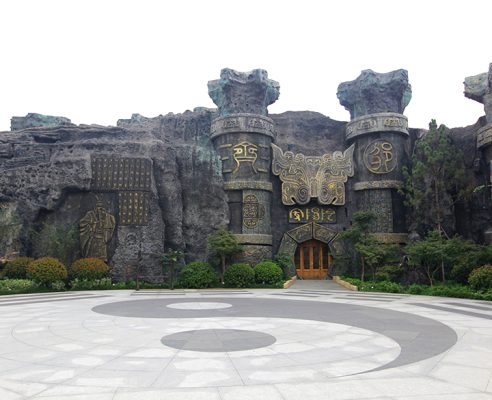
6.Naturalism “Yin and Yang”, making their debut in I Ching, interpret the provenance of all things including the universe at large. T...
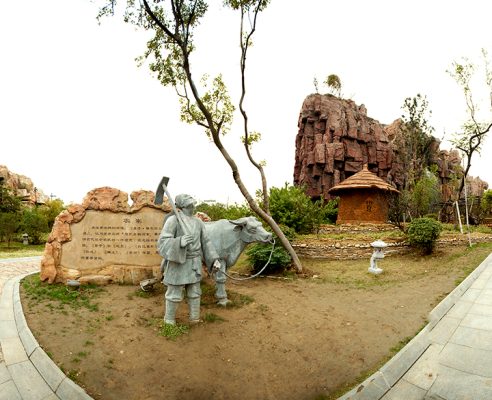
7.Agriculturalism The best paragon of Agriculturalism was Xu Xing, who asserted himself as a descendant of Shennong. He studied har...
6.阴阳家 “阴阳”最早见于《易经》,用来解释天地万物的源头。“五行”的概念最早见于《尚书》也就是大家所熟知的“金、木、水、火、土”。这两者到战国时才渐渐合流,成为了“阴阳五行学派”也就是我们现在看到的阴阳家。 阴阳家景区以一块巨大的黑色陨石山体为背景...
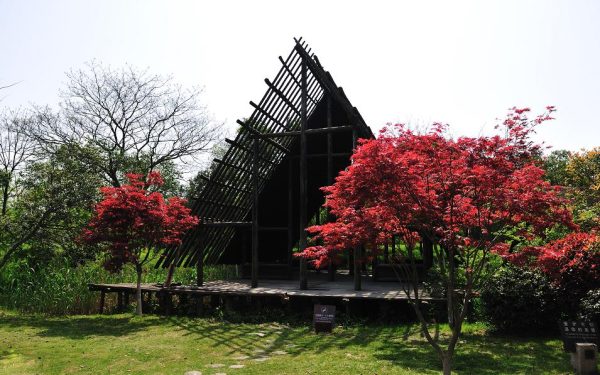
3.Yancheng Antique Dwellings What pleases the eye to the left is a row of rustic dwellings, which imitate the ancient cottages of the Spring a...
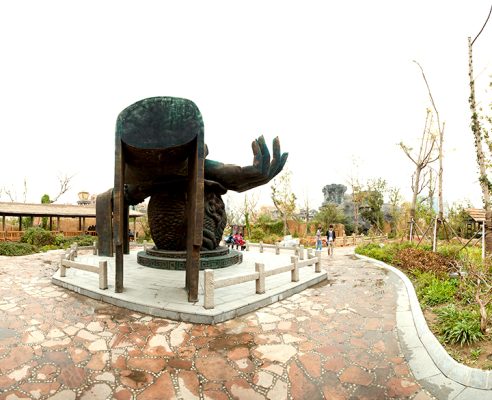
8.School of Doctors In ancient China, this school points to doctors, in particular famous ones like Eastern Han’s Zhang Zhongjing and Hua Tu...
7.农家 代表人物为许行。许行以神农氏的后人自居,在研究农业生产技术的同时,提出了“君民并耕”的政治主张,意在劳动者自食其力的平等思想。 许行带领他的弟子辛勤劳作,换来的是“五谷丰登,丰衣足食”。古代的五谷一般是指稻、黍、稷、麦、菽,即...
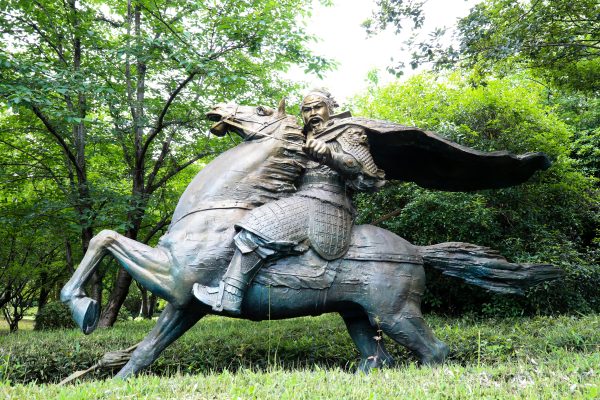
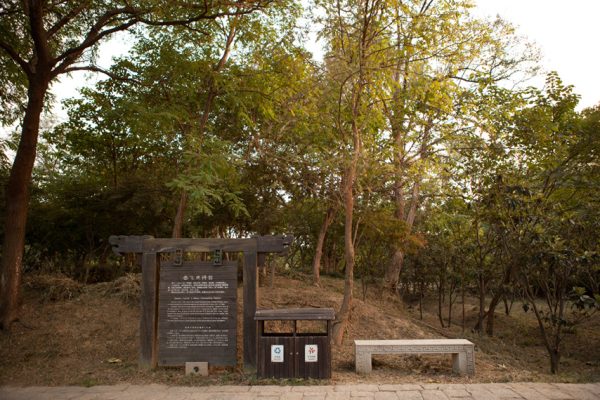
4.Generalissimo Yue Fei’s General-Appointing Terrace What we can see in the front left-hand side is the relic site where Yue Fei, a generalissimo of the Southern Song, ever ...
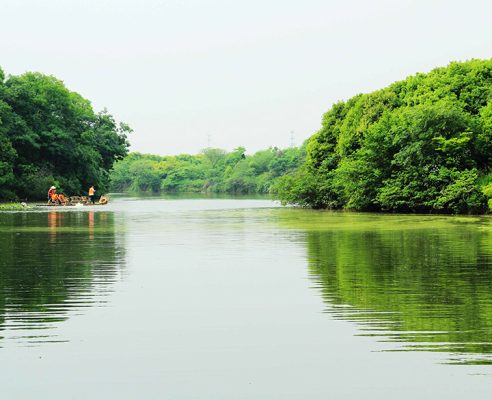
5.内城河 现在各位看到的是淹城的第二道护城河——内城河。淹城的护城河水平均水深4米,最深的地方有十几米;河宽30—50米,最宽的地方达60米。在内城河里先后出土过4条独木舟,其中一条长11米的独木舟被国家博物馆收藏,一条4.2米的被南京...
8.医家 在古代,医家就是指医生。中国历代曾出现过许多名医,如东汉张仲景、神医华佗、药王孙思邈等。春秋时期的名医是神医扁鹊,扁鹊原名叫秦越人,由于他医术高超,人们便以上古时代神医“扁鹊”的名号来称呼他。 广场中心的这个雕塑是医生把脉的场景,据《史记》...